

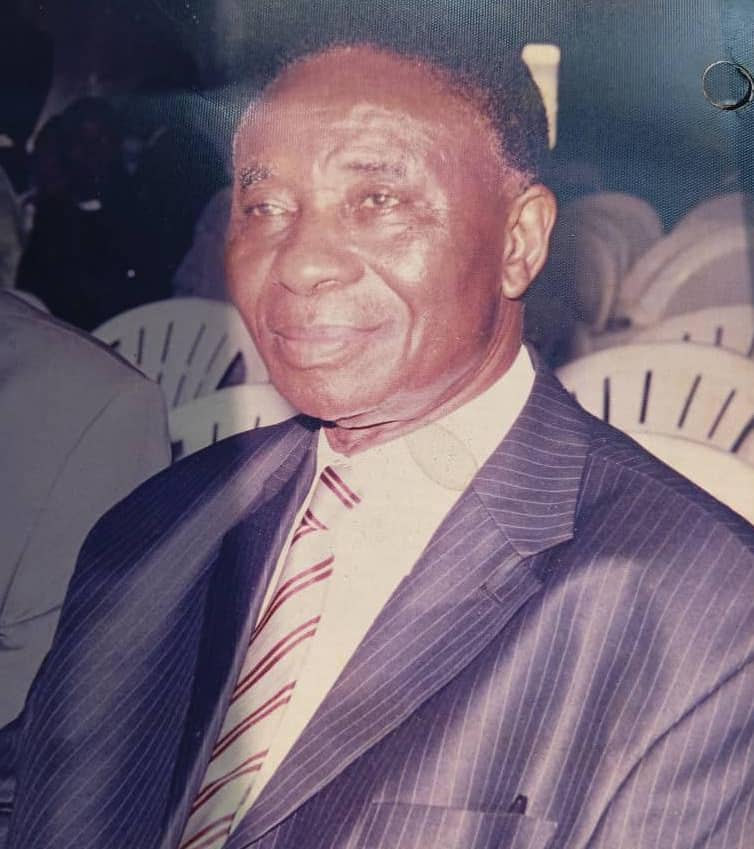
Chief Dr. Bassey Udo Ekong, Ph.D
(December 24, 1935 – 2009)
Transportation Economist | Administrator | Public Policy Expert
Chief Dr. Bassey Udo Ekong was a highly respected Nigerian transportation economist, seasoned administrator, and public policy expert whose career bridged academia, national economic planning, and maritime governance. Through decades of service in strategic public institutions, he played a critical role in shaping Nigeria’s transportation, shipping, and economic policy landscape.
Early Life and Background
Born on December 24, 1935, in Oku Iboku, Itu Local Government Area of Akwa Ibom State, Dr. Ekong exemplified a life committed to scholarship, public service, and national development. He spent his later years in Uyo, Akwa Ibom State, and passed on in 2009 at the age of 74, leaving behind a legacy of excellence and integrity.
Education
Dr. Ekong’s academic journey laid a solid foundation for his expertise in economics and transportation policy:
Cruickshank School, Oku Iboku (1940–1946)
Macgregor College, Afikpo (1951–1952; 1956–1957)
Wolsey Hall, Oxford (Correspondence Studies) (1958–1959)
University of Nigeria, Nsukka
B.Sc. Economics (1960–1964)Michigan State University, East Lansing, USA
M.A. & Ph.D. in Economics
(Specialization: Transport Economics) (1970–1974)
Professional Career
Early Career
Dr. Ekong began his working life as a school teacher with the Presbyterian Mission Schools (1953–1959). He later transitioned into the transportation and shipping sector, gaining industry experience with Aluminium Products Limited, Port Harcourt, and as a Shipping Manager-in-Training at Elder Dempster Agencies, Lagos.
Central Bank of Nigeria (1965–1987)
Dr. Ekong joined the Central Bank of Nigeria (CBN) in 1965, where he served for over 22 years, rising through the professional ranks to senior leadership:
Research Assistant
Assistant Economist
Economist
Senior Economist
Chief Economist
Assistant Director
Deputy Director
Deputy Director of Research, Economic Policy Unit (1984–1987)
His work at the CBN significantly influenced economic research, transportation planning, and national policy formulation.
National Leadership Appointments
Executive Secretary, Nigerian Shippers’ Council (1980–1984)
Pioneer Director-General, National Maritime Authority (NMA)
(now Nigerian Maritime Administration and Safety Agency – NIMASA) (1987–1989)
In these roles, Dr. Ekong was instrumental in establishing regulatory frameworks and institutional structures for Nigeria’s maritime and shipping sectors.
Committees and Public Service
Dr. Ekong contributed his expertise to several high-level national and international committees, including:
Member, Study Panel on the Use of Skylab Imagery for Crop Acreage Estimation, Michigan State University
Chairman, Study Group on the Nigerian National Shipping Line
Member, Investigation Panel on Customs Port Arson
Member, Task Force on the Standard Gauge Railway Line Project, Nigerian Railway Corporation
He also served as President of the African Association at Michigan State University during his doctoral studies.
Professional Affiliations and Honors
Fellow, Chartered Institute of Transport (CIT), London (1982)
Chairman, Chartered Institute of Transport (Nigeria) (1988)
John Anderson Prize for original research on Nigerian migrant labour to Spanish Guinea
Life Member, Beta Gamma Sigma, U.S. National Scholastic Fraternity (1974)
Personal Life
Chief Dr. Ekong married Grace Eyibio Effiong in 1966. Their union was blessed with four sons and two daughters. Outside his professional pursuits, he enjoyed music, dancing, and sports, reflecting a well-rounded and vibrant personality.
Legacy
Chief Dr. Bassey Udo Ekong remains celebrated as a pioneer transportation economist, visionary administrator, and nation-builder. His enduring contributions to Nigeria’s transportation economics, maritime governance, and public policy continue to inform academic research and national development discourse. His life stands as a testament to service, intellectual rigor, and unwavering commitment to the progress of Nigeria.